


Is College Prep Bad? Why Every Child Needs an Entrepreneurial Mindset by 5th Grade
For decades, the American education system has operated under a single, unchallenged directive: prepare children for college. From the moment a child picks up a pencil in kindergarten, the "college prep" machinery begins to hum in the background. We measure success by test scores, rank children by their ability to follow instructions, and focus heavily on a curriculum designed to satisfy admissions officers ten years down the line.
But let’s be real: the world has changed, and the traditional college prep model is failing to keep up.
By the time a child reaches 5th grade, they shouldn't just be focused on getting an "A" in long division or memorizing state capitals. They should be developing the confidence and mindset of a creator. In a rapidly shifting global economy where AI and automation are redefining the workforce, focusing solely on college admission isn't just outdated: it’s a disservice to your child’s potential. At ILIM School, we believe that every child needs an entrepreneurial mindset by the time they finish elementary school.
The College Prep Trap: Why "Standard" Isn't Enough
The "college prep" label has become a shield for schools to continue using industrial-age teaching methods. It creates an environment where students are trained to be passive consumers of information rather than active problem solvers.
When a school focuses exclusively on college prep in the early years, several things happen:
Compliance over creativity: Students learn that the "right answer" is the one the teacher wants to hear, effectively killing their natural curiosity.
Risk aversion: Because grades are the primary currency, children become afraid to fail. Yet, failure is the greatest teacher in the real world.
Narrow skill sets: Standardized testing focuses on rote memorization, leaving no room for negotiation, leadership, or financial literacy.
The "Wait and See" approach: Parents are told their children will learn "real-world" skills once they get to high school or college. By then, the window for foundational mindset development has often closed.
At ILIM School, we see education differently. We aren't just looking at the next grade level; we are looking at the next twenty years of your child's life.

Why 5th Grade is the "Mindset Milestone"
Why 5th grade? Developmental psychologists and educators recognize that the ages of 9 to 11 are a pivotal transition period. This is when children shift from "learning to read" to "reading to learn." It is also the age when their sense of self-efficacy: the belief in their own ability to complete tasks and reach goals: solidifies.
If a child reaches middle school believing that their only job is to follow a syllabus, they enter a "test-taker" loop that is incredibly hard to break. However, if a child reaches the end of 5th grade with an entrepreneurial mindset, they possess a distinct advantage. They don't just ask "What is the answer?": they ask "Why does this problem exist, and how can I fix it?"
The entrepreneurial mindset is not about teaching every 10-year-old to start a tech company (though many of our students could). It is about empowerment. It is the belief that they have the agency to change their environment. This is why we prioritize entrepreneurship and life skills alongside rigorous academics.
Creator vs. Consumer: Shifting the Paradigm
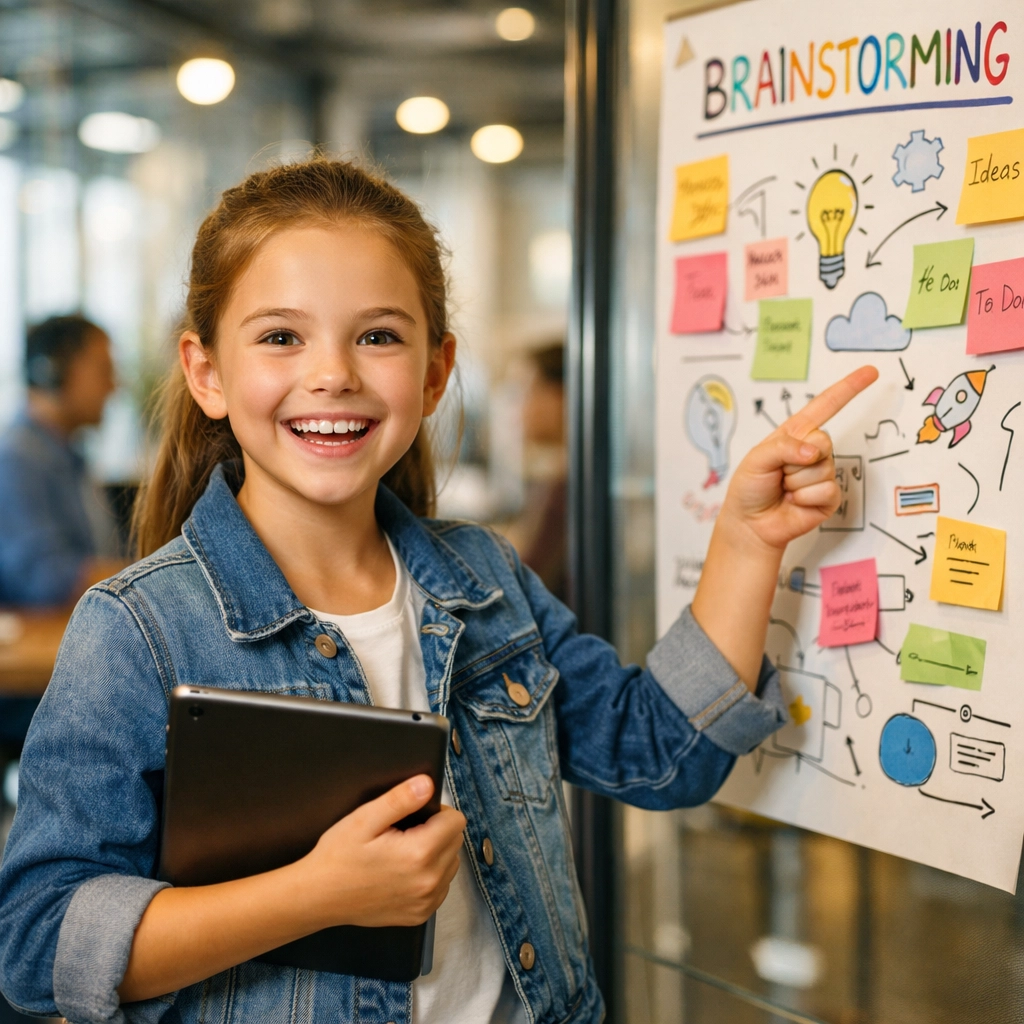
In traditional settings, students are consumers. They consume lessons, consume textbooks, and consume standardized tests. In an entrepreneurial environment like ILIM School, students are creators.
What does a "Creator" mindset look like in a 5th grader?
Identifying Opportunities: Instead of complaining about a messy playground, they propose a system for organization.
Resourcefulness: They know how to find information and tools without waiting for a teacher to hand them a worksheet.
Effective Communication: They can "pitch" an idea, explain its value, and handle constructive criticism without taking it personally.
Resilience: When a project fails, they don't see it as a "bad grade." They see it as data to inform their next attempt.
If we want our children to thrive in the 2030s and beyond, they must be the ones designing the systems, not just operating them.
The ILIM Pillars: Real-World Preparation Starting Early
We don't just talk about entrepreneurship; we integrate it into the very fabric of our curriculum. Our approach ensures that by the time a student is ready for middle school, they have a toolkit that goes far beyond the standard "college prep" checklist.
1. Financial Literacy and Economic Thinking We believe children should understand the value of a dollar and the mechanics of an economy before they ever hit puberty. This includes:
Understanding the concepts of profit and loss through student-led micro-businesses.
Learning about investing and how capital can be used to grow ideas.
Practicing budgeting for school projects to understand real-world constraints.
2. The Art of the Pitch (Communication Skills) Public speaking shouldn't be a terrifying once-a-year event. Our students learn to articulate their thoughts clearly and persuasively.
Presenting ideas to peers and mentors for feedback.
Learning the "elevator pitch": the ability to summarize a complex thought in 60 seconds.
Practicing active listening to understand the needs of their "customers" (whether those are classmates or community members).
3. Adaptive Problem Solving The real world doesn't come with an answer key at the back of the book.
Students engage in Project-Based Learning that requires them to solve community-specific issues.
They are encouraged to use design thinking: empathize, define, ideate, prototype, and test.
4. Leadership and Collaboration True leadership isn't about being the loudest person in the room; it’s about bringing out the best in others.
Rotating leadership roles in group projects to understand different perspectives.
Learning how to delegate and hold team members accountable in a respectful way.
Moving Beyond the "Cookie-Cutter" Frustration
We talk to parents every day who are frustrated. They see their bright, creative children losing their "spark" in traditional classrooms. They see kids who are bored because they’ve already mastered the material, or kids who are anxious because they don't fit the standard mold.
If you are looking for Montessori schools in Charlotte or searching for a "next generation" education, you’re likely looking for something that respects your child’s individuality. You aren't just looking for a school that will get them into a good university: you’re looking for a school that will prepare them for life.
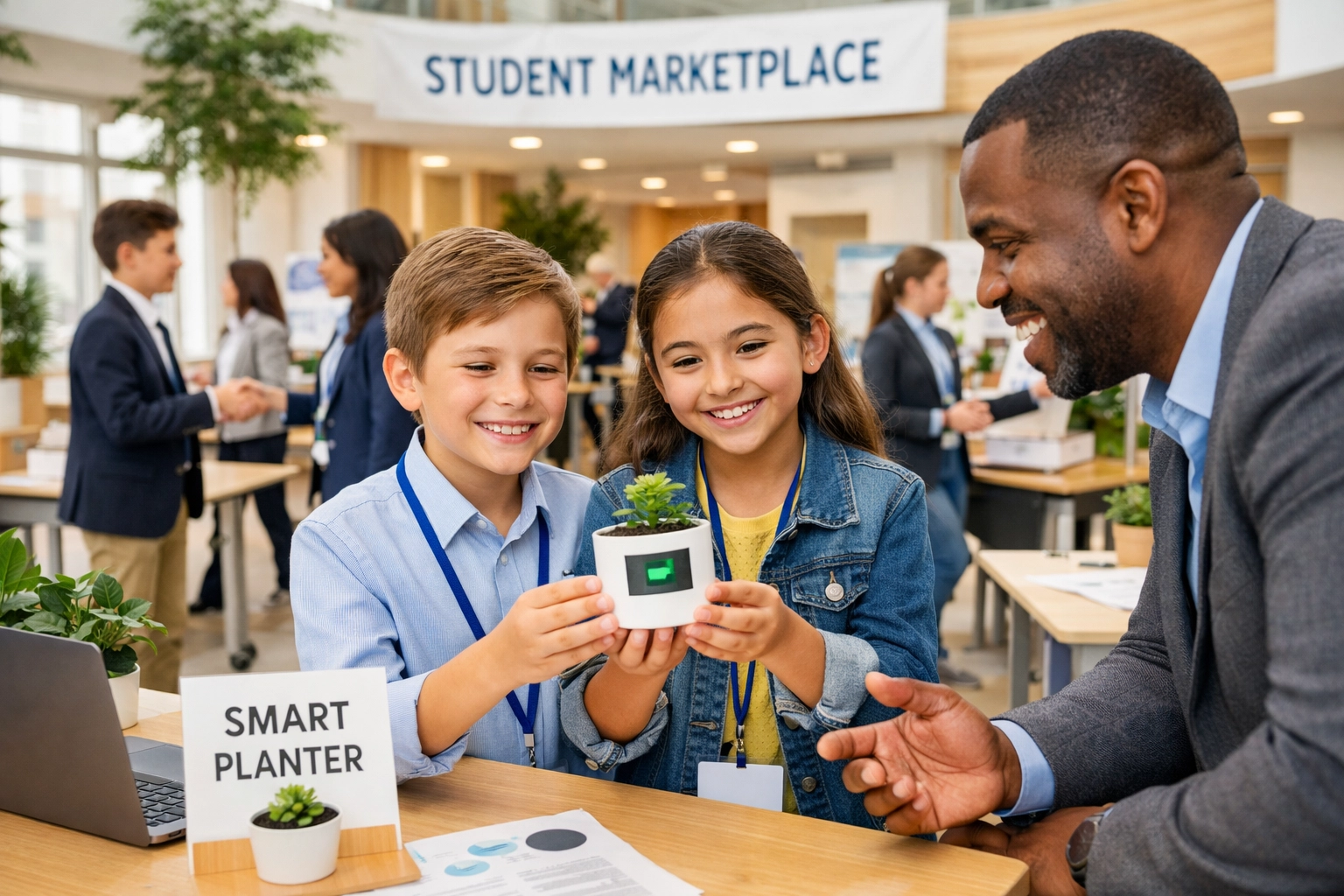
The truth is, a child with an entrepreneurial mindset will have no trouble getting into college. In fact, they will be the most sought-after candidates because they bring something that most students lack: initiative. While other applicants are listing their extracurriculars, ILIM students are discussing the businesses they built, the problems they solved, and the teams they led.
Take the Next Step: Is Your Child Ready to Create?
We believe that education should be an adventure, not a treadmill. If you want your child to stop just "prepping" for a distant future and start building their own today, it’s time to see what a difference an entrepreneurial focus can make.
The traditional system will tell you to wait. It will tell you that these skills are for "later." We say the time is now. By 5th grade, your child can be a confident, capable, and creative leader.
Ready to see it in action?
Explore our programs: Check out our elementary curriculum to see how we blend academics with real-world skills.
Visit us: The best way to understand the ILIM difference is to see our students in their element. Book a tour today.
Join the community: If you’re ready to move away from the "cookie-cutter" model, start the process by submitting a parent request or joining our waitlist.
Don't let your child’s potential be limited by a 20th-century mindset. Give them the tools to innovate, lead, and succeed in the 21st century. At ILIM School, we don't just prepare students for the world; we prepare them to change it.


Comments